
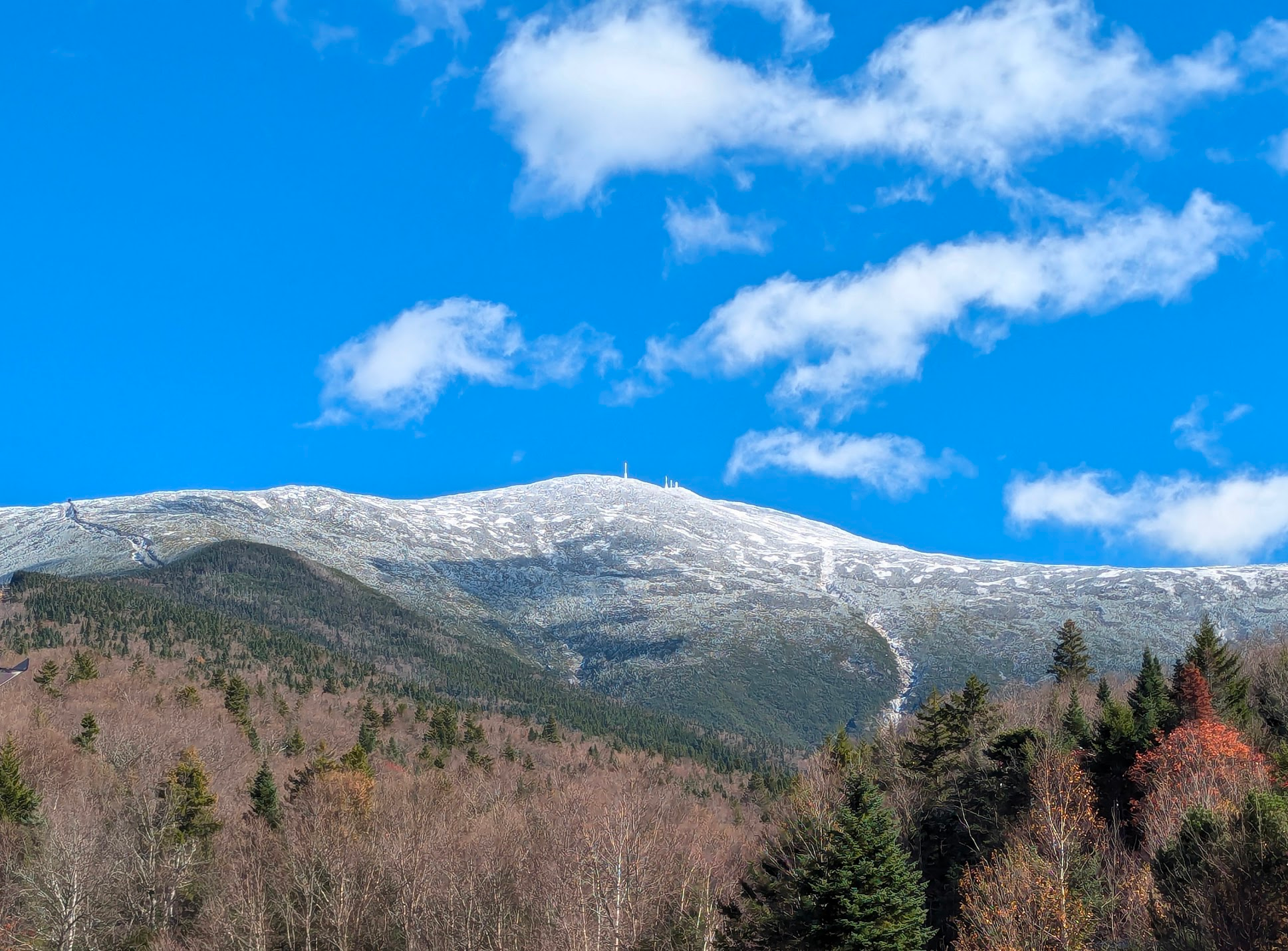
Altitude is a funny thing, and being on an exposed rock higher than anything else around can give you a bit of perspective. When you stand on the top of the Observatory tower, you are the tallest person on solid ground for a thousand miles. When it’s clear you can look up and get the sense that you are standing before a great and terrible boundary. For those that don’t know, our atmosphere is fairly thin. I’m speaking in astronomical terms here, as the astronomer in me can never stay dead, but the part of our atmosphere that every living thing resides in only stretches about 11 miles above sea level at its highest, warmest parts near the equator. That might sound like a lot, but from the summit of Mount Washington on a clear day, you can see 130 miles, which means the land you can see around you stretches well over ten times further than the air you can breathe above you. Up this high, winter sets in rapidly, and two weeks ago, we took our last field trip up the mountain.
It was a frigid day down at the base and my liner gloves were barely keeping my hands warm while we sat inside the parked vans, waiting to get the call that the road was safe. My radio was turned up so I could listen to the chatter. We could see the kids across route 16, huddled in their school’s vans across two lanes of speeding cars and noisy trucks. Behind us on the summit a thin layer of ice and snow was glittering high above while the Auto Road was throwing down grit and noting ice patches along the winding 7 miles. We were waiting for a window we weren’t sure was going to open. Eventually, we got the call and the students were shuttled across the highway to the lot we were waiting in. I loaded my van and we headed up the mountain. We journeyed higher and higher until our SUV had to leave the caravan and wait for us below the ice. I was the lead car after that, and I felt the weight of responsibility sink in as I rode the centerline, avoiding the ice creeping in at the edge of the road. I often stopped to watch for glittering patches before crawling us forwards once again. The final stretch, a steep and narrow service road, can often be the scariest part, so I held my breath and gunned it over the first hill.
Driving on Mount Washington can be a lot of things: scary, beautiful, cold, to name a few, but there’s nothing quite like it. There are days when it looks like a beautiful meadow of rocks and flowers, and there are days when I feel like I’m trapped in a science fiction movie, navigating ice spikes growing out of the road while plunging into a blue-black alien darkness only illuminated by my headlights, but the reward is worth every second of it.
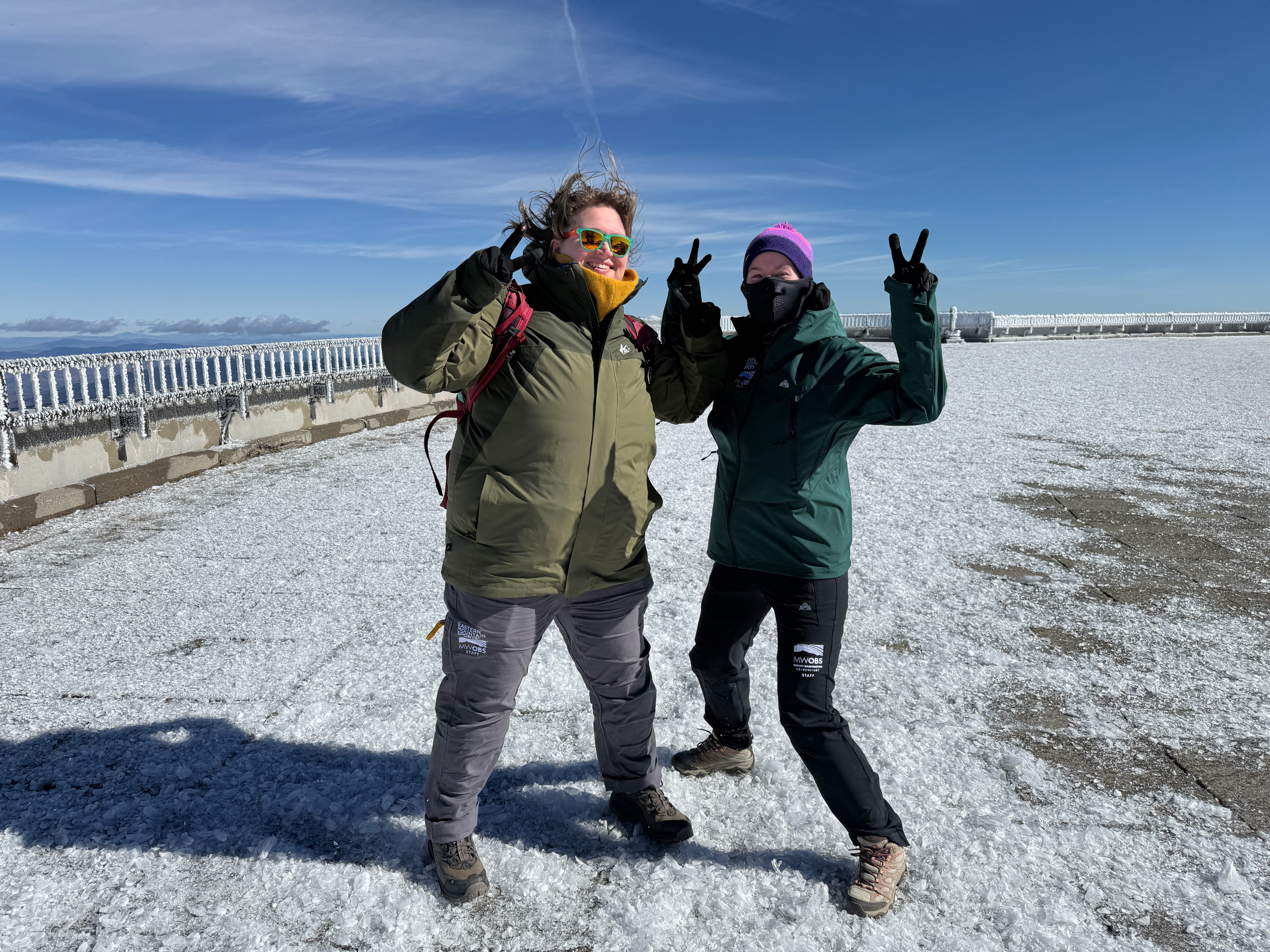
When I let them out of the car, one kid said “I just realized how much I have to live for!” and his friends erupted in laughter. We took them through the building and up onto the observation deck, where the tiles and railings had already been encased in feathers of rime ice. The stuff the wind had snapped off littered the ground with shimmering crystals that made a clinking sound as we walked. There was something magical there, standing at the edge of the world, traversing shards of glass, while six thousand feet below, life carried on as normal.
Zac has served his LRCC term with the Mount Washington Observatory, where he educates students across the region and beyond about weather and climate science, and the history of the mountain itself. He has enjoyed facilitating adventurous experiences for young learners and hopes to continue that work wherever he goes next. Learn more about him here.