
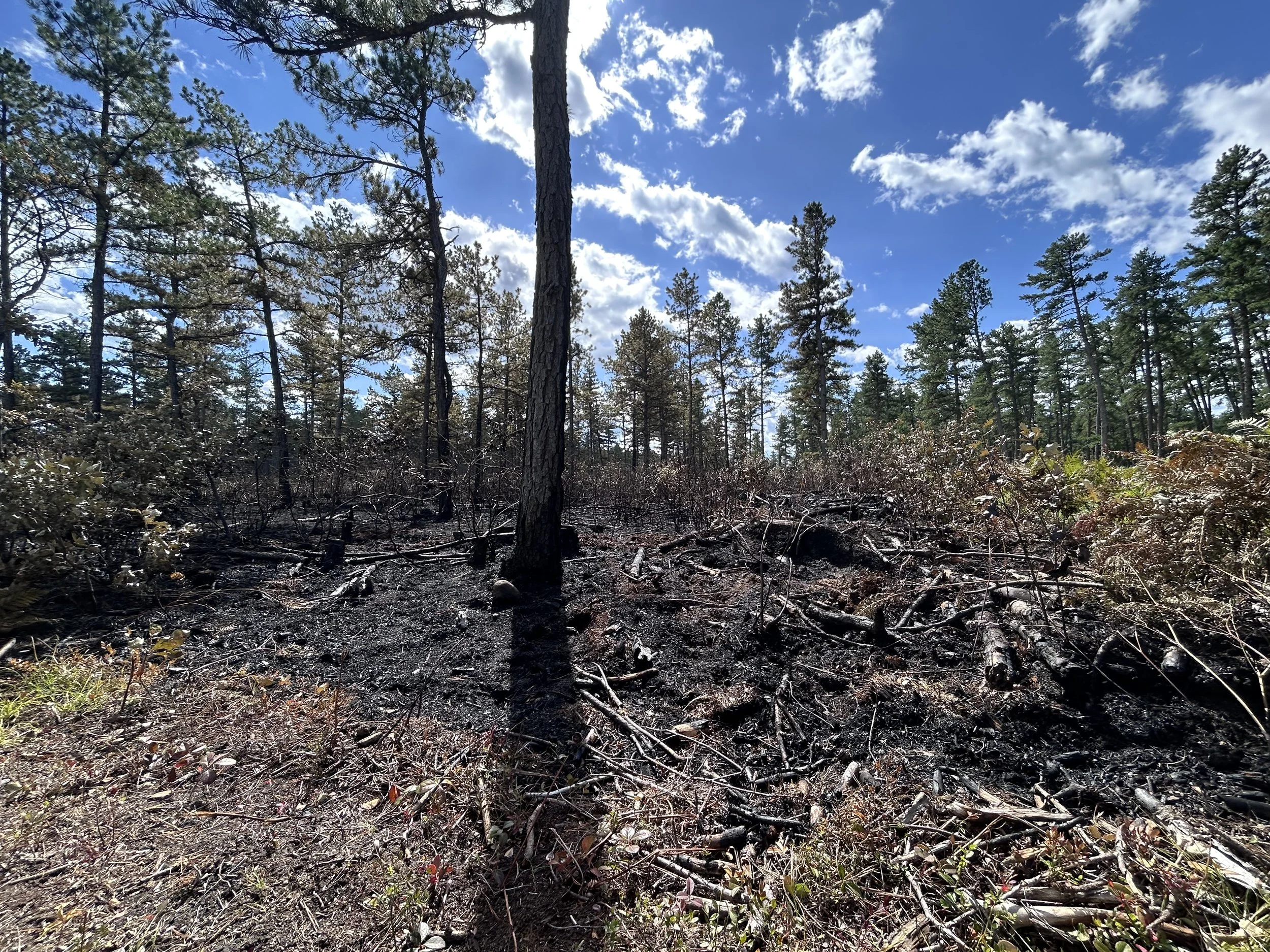
I feel like a marshmallow. My body is inches from the flames, and the heat is radiating. My role for this prescribed burn is using the drip torch. I help ignite the fuels by spreading the fire along the edge of the unit where it meets the firebreak. I dip the torch down to some already ignited vegetation, light up the tip of the torch, and walk down the fireline, touching the torch to the unburned vegetation. I look behind me and see the UTV and engines ready to spray with water.
I listen on my radio and hear that we have closed the ring around the unit. It’s time for mop-up. Everyone’s favorite part of prescribed burns. Everyone with a hand tool starts digging down to mineral soil where the ground is smoking next to the firebreak. The firebreak is typically the first area you want to secure before prioritizing other areas of the unit. I use my grub hoe and play what often feels like a game of Whack-A-Mole to get the smoke out. The engines and UTV’s once again follow close behind, spraying water at the smoke once we open up the duff layers.
The combination of breaking apart the soil and water is what best puts out the smoke. When there is too much duff layer left, it makes it difficult for water to penetrate through the soil and put out the smoke. After an hour, everyone starts heading back to the staging area (extra equipment, food, vehicles, and the emergency pump are located). I know our work is far from over, though. In New Hampshire, you have to stay on site until all the smoke is put out from a prescribed burn. My crew partner Kylie and I will be staying the next couple of days and helping patrol to make sure all the smoke is out.
Why do we have prescribed burns? We burn at the Ossipee Pine Barrens Preserve to help manage the globally rare pitch pine-scrub oak ecosystem that grows here. Fire helps burn the duff layer and create mineral soil, which pitch pine needs to grow. Species such as scrub oak and lowbush blueberries here also thrive with fire. I am excited to see in a couple of years the regeneration that we will get from the two prescribed burns I helped with.
I grow in full sunlight.
I have three needles per fascicle.
I have serotinous cones.
What am I?
Pitch Pine.
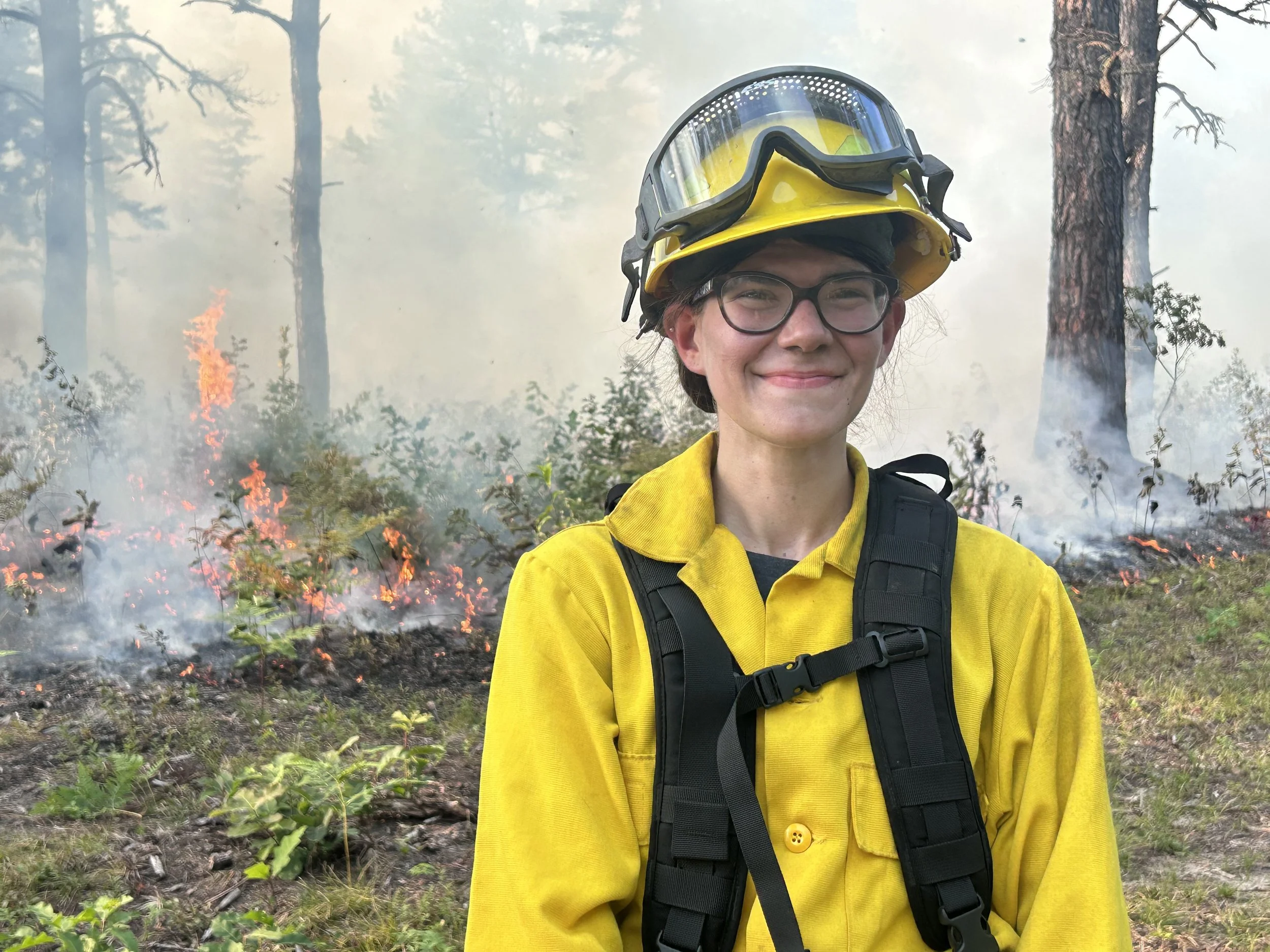
Erin is serving with The Nature Conservancy as an AmeriCorps Land Steward. She graduated from SUNY ESF with a degree in environmental studies. In 2025, she hiked the Appalachian Trail encouraging her to give back to the land. When not hiking, she’s baking, reading, or gardening. Learn more about her here.