
As an astronomer, I’ve had my head in the clouds most of my life. I’ve been involved in STEM education my entire career thus far, but it has been something of a novel experience to be able to go out and touch the content I’m teaching with my own two hands. Taking this position at the Mount Washington Observatory is one step in my journey to find a career path that isn’t as completely untouchable as the stars.
This winter has been extremely busy. Every week I go into classrooms and I am able to connect this real, tangible location to broader topics in a very human way that I’ve always struggled to find in space education. While a lot of my work still isn’t as direct as the work of some of my peers, it is still an absolutely vital part of the framework we need to get people involved. The first step to an environmentally conscious world is learning. This is something I've always felt very strongly about, and I try to bring that passion to this position. It’s a creative process; my desk is usually littered with trash and cheap craft materials– old pasta sauce jars, popsicle sticks, used bottles I pulled out of the recycling, single-use grocery bags I somehow can’t stop accumulating, yarn I found in the bottom of a bin in the office– and I experiment with them over and over again. Will this activity teach the lessons I want it to teach? Is it something the kids will be able to do? Is it even going to work? Right now, I’m trying to create two programs: one about kites, and another about pollution. The core topic of each– wind and aerodynamics for the kites, ecological footprint and environmental awareness for the other– couldn’t be less connected, but standing in the parking lot flying a kite made of cut up Market Basket bags and plastic straws got me thinking about where all those materials go, and how just the fact that they exist in such easily-obtainable quantities is one of our biggest problems right now.
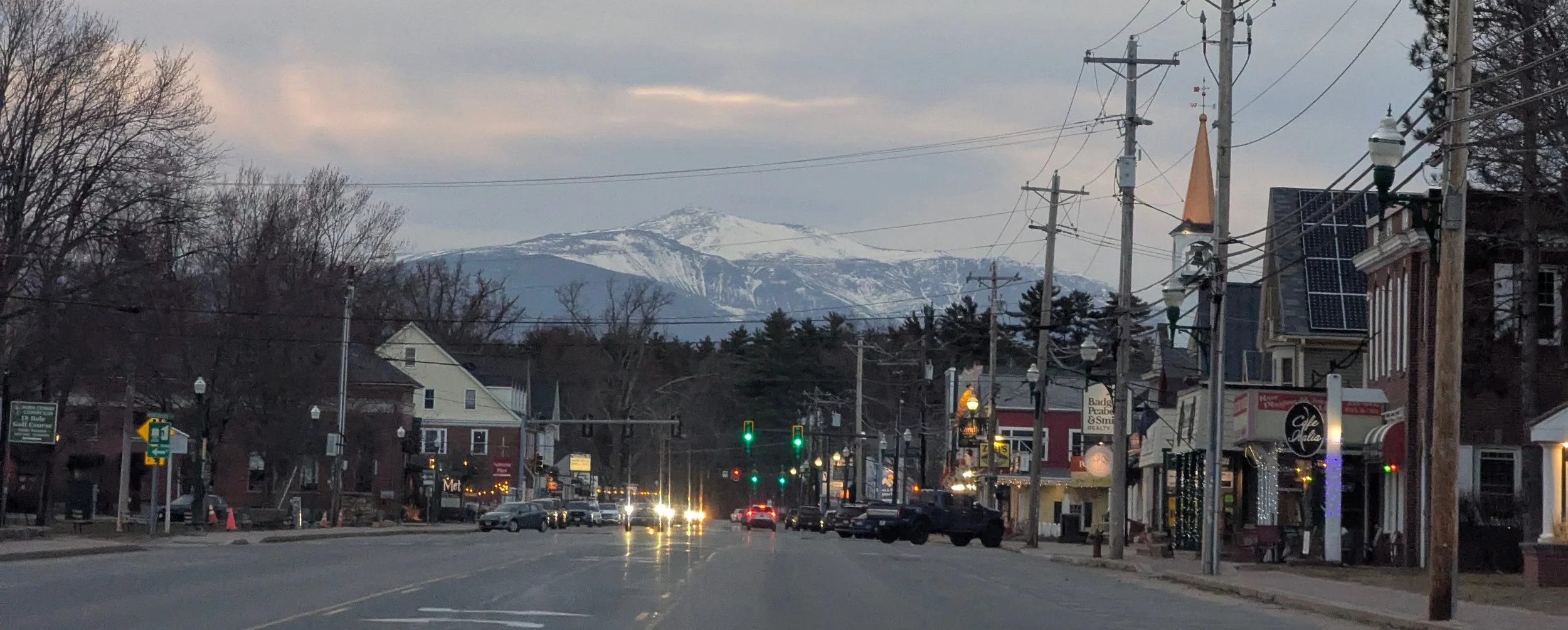
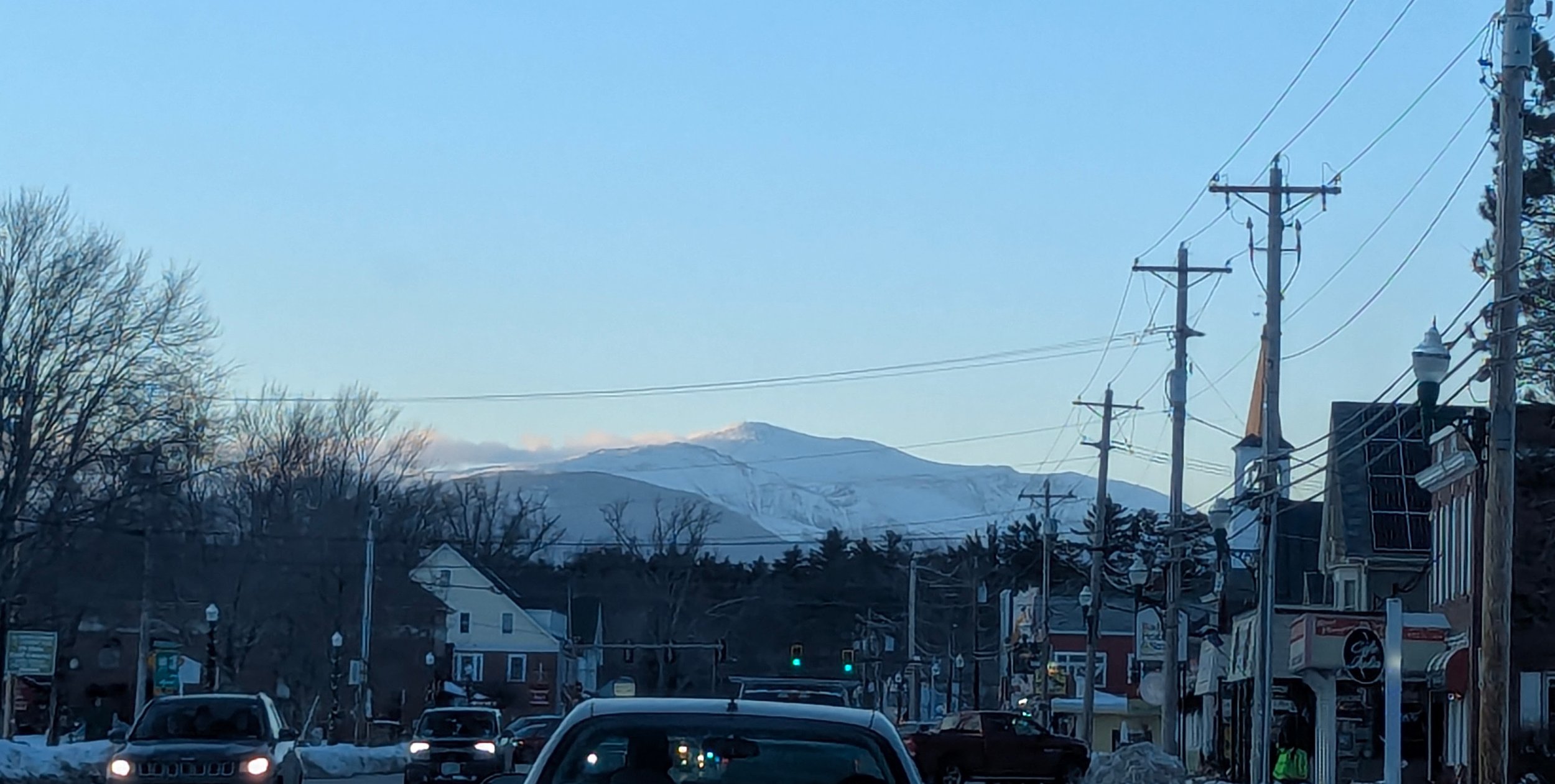
It’s a problem you can’t turn away from once you start to see it. The students we work with know about it, and that it’s just one of many things affecting their communities, but they don’t always have the how or the why. In the four months I’ve been here, the mountain has become a part of my life; something close to an old friend that stands quietly, but powerfully in the distance every time I leave my neighborhood. The hundreds of inches of snow that fall up there every year are melting right now and running down into rivers like the Saco that I drive over every day on my way to the office. The river has swelled over and over this spring, eroding away at its banks and circulating nutrients and pollutants alike through the watershed. Nearby, the mountain stands icy white on the horizon one day, a dark, wet brown the next, and back to icy white again the day after that. That’s not the sort of timescale I can point to in a lesson about galaxies.
I find that a lot of people care about space because it lets them leave everything else behind. I want people to care about the environment because it is where they’ll spend the rest of their lives. Mount Washington has been a major landmark in this region for thousands of years, and one that dominates and commands the weather and land around it. This land is where most of these students live, so what better place to start?
Zac is serving with the Mount Washington Observatory as a STEM Programs Educator. He is originally from Virginia, and has spent a lot of time in the Northwest, and in New England (where he’s been enjoying the cold weather and familiar summers). He graduated with a degree in Astronomy in 2024, and when he’s not serving or driving frantically into the wilderness to stargaze, you can typically find him making art, or just hanging out. Learn more about him here.