
When I decided to move to New Hampshire, my one request for a Christmas present was a high-quality pair of snowshoes. Little did I realize at the time that, over my first couple of months serving with The Nature Conservancy (TNC), my snowshoes would see so much use maintaining TNC boundaries at snowy preserves that the purple paint would already begin to fade. Coming from Wisconsin, I’m no stranger to winter. However, when the snow finally melted, spotting the first Red trillium or White violet was cause for celebration.
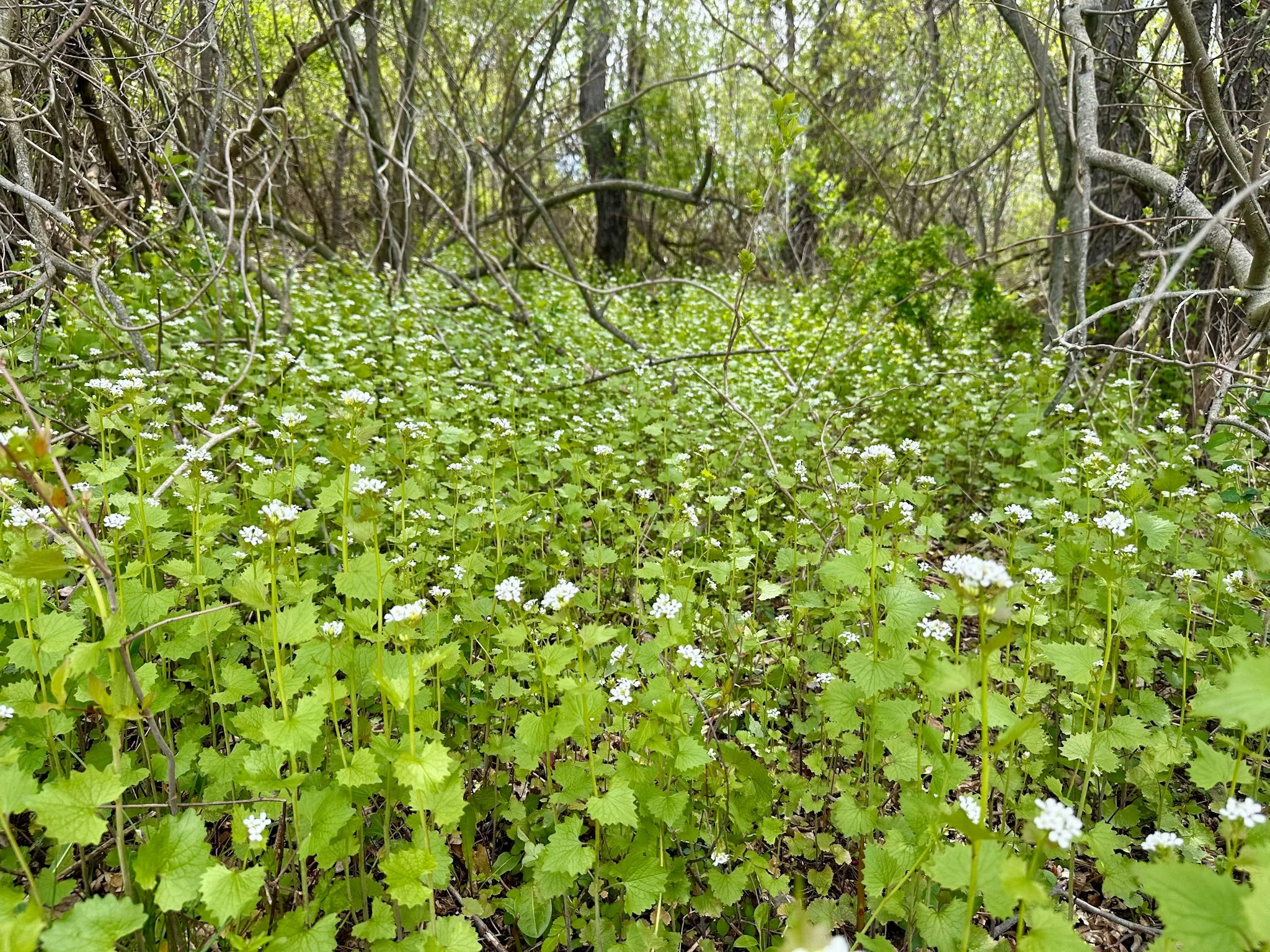
Along with finding cinnamon ferns or jack-in-the-pulpit comes finding invasive plants like garlic mustard and periwinkle. Once I knew what to look for, it was impossible not to see these invaders everywhere. One of the joys of working in the field is the opportunity to learn new plants, but it’s discouraging to find out when they’re invasive. These plants, while sometimes pretty to look at, aren’t so pretty when considering how they can seriously weaken the ecosystems of the preserves I’ve grown to know. For starters, invasive plants outcompete native plants for water, sunlight, and other nutrients, limiting the native plants’ ability to grow. Plus, they don’t have predators to keep their growing populations in check. If left alone, they could easily overtake and alter the natural plant community.
But that’s where I come in. While serving with The Nature Conservancy, one of the many things my AmeriCorps counterpart, Erin, and I get to do is to help keep these invasives in check and enlist volunteers to do so. Together, we spend mornings on our hands and knees, pulling up patches of garlic mustard and other invasive plants.
There’s nothing quite as satisfying after a workday as knowing we slowed their spread and created more space for native plants to grow and flourish.
Moreover, our volunteer workdays consist not only of invasive plant pulls but also of trail work, starting with building a trail reroute. To put it simply, a section of the trail next to a pond often became a little too wet, so we relocated it to higher ground so visitors no longer have to walk through water at certain times of the year. We marked out the new trail, removed vegetation until only a dirt path remained, smoothed it out, moved trail signs, and covered up the old trail with brush until we were no longer able to tell there had ever been a trail there in the first place. Today, we get to enjoy the results of our work anytime we hike the trail, knowing we improved it for future visitors.
However, the work itself isn’t the only rewarding part of these events; spending time with volunteers is meaningful as well. Most days, I work only alongside Erin and the occasional member of the TNC stewardship team. With just our small team responsible for the upkeep of 30 TNC preserves across the state, volunteers save much-needed time and effort. It’s also a chance to learn from them and hear about their experiences with The Nature Conservancy and New Hampshire in general.
Now, as we start diving into these volunteer workdays, I’m beginning to appreciate that these members of my community want to spend their free time assisting Erin and I with improving the health of our preserves. I went into the environmental field expecting to spend my days alone in the woods, so our volunteer days demonstrate the important role the community plays in protecting our ecosystems while having a little fun along the way. In a world where our green places are constantly threatened by one thing or another, like the spread of invasive species, it’s encouraging to see them participate in conservation efforts in their own backyard and choose to do so alongside us.
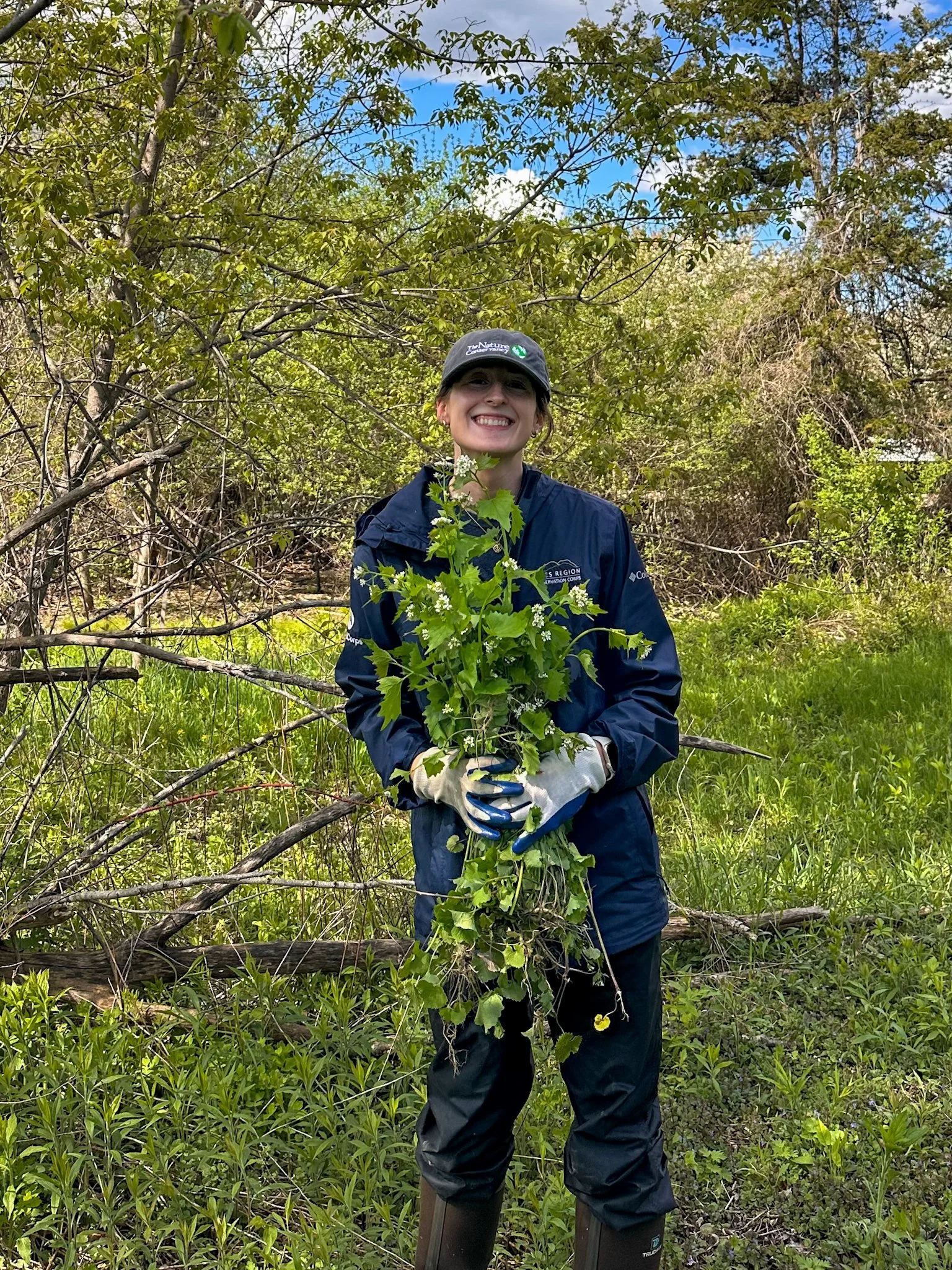
Kylie is serving with the Nature Conservancy as an AmeriCorps Land Steward. She graduated from the University of Wisconsin-Madison with a master’s degree in Environmental Conservation. Before joining the LRCC, she created communications content for the friends group of a National Wildlife Refuge in Florida, worked on ecological restoration and trail-building projects across the Southeast, and conducted forest plant data collection in Wisconsin. Learn more about her here.