
Being underwater is a truly strange and wonderful experience. Looking through the clear lenses of my mask and breathing steadily through my snorkel allows me to see an entirely new world that's inaccessible from a boat or on shore. Rays of sunlight trickle down to the silt below me, dancing with the movement of the water, much like sunlight filtering through the trees on a forested trail. Native submerged plants, such as bladderwort and several species of pondweed, reveal themselves simply by looking beneath the surface, invisible to me from above. As I continue moving, I am greeted by a school of perch that I swim directly through, their scales flashing as they scatter around me. In the shadows, two large bass stare back, unbothered by my aquatic presence.
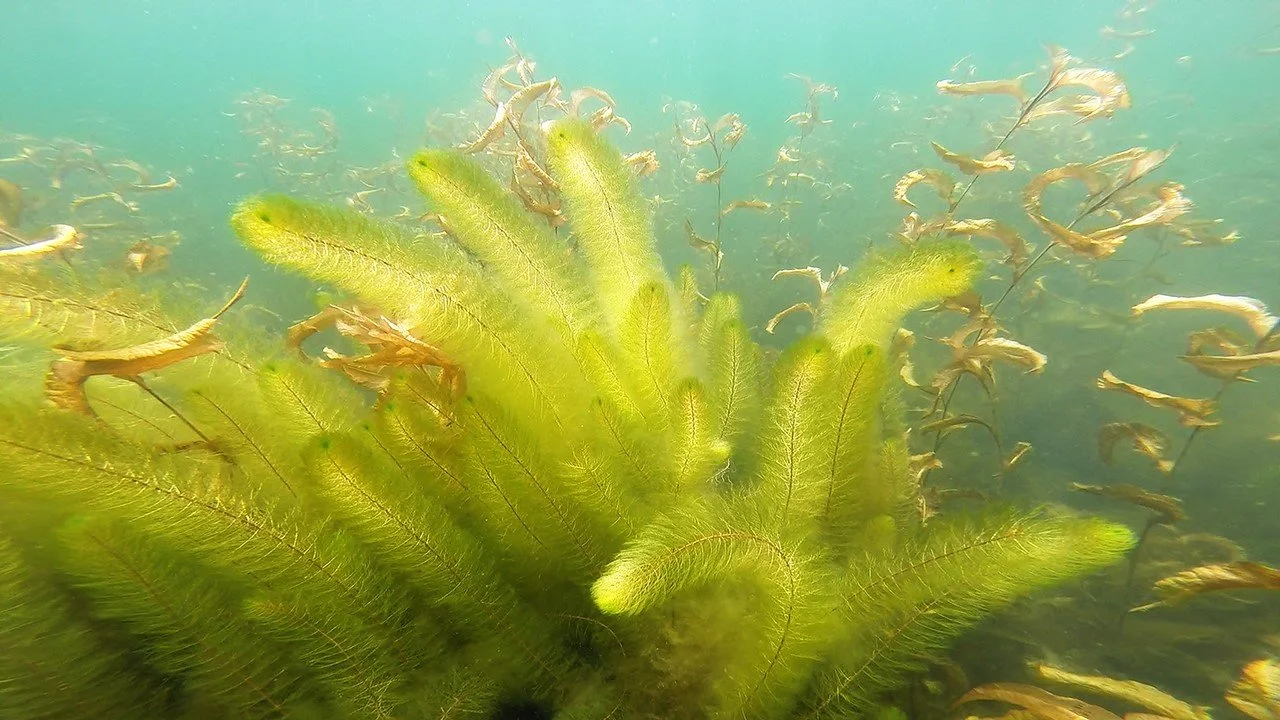
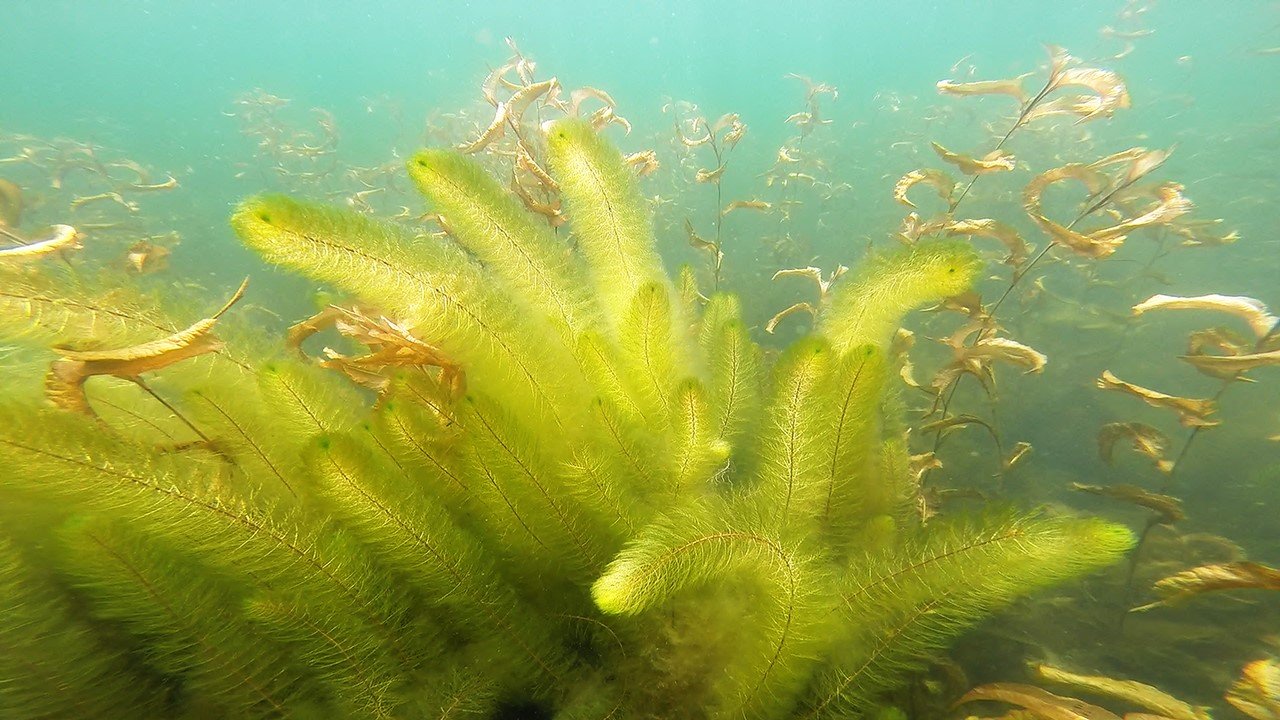
Throughout the month of June, LRCC members at the Squam Lakes Association have spent countless hours surveying the lake for an invasive aquatic plant known as variable milfoil. Originally native to the southeastern and midwestern United States, variable milfoil was first discovered in Squam Lake in 2000. Since then, we have worked to control its spread through hand-pulling and suction harvesting. These efforts have made a significant difference; Squam has not experienced a major milfoil outbreak since 2007. However, it remains a problem with how easily it can reproduce. Fragmentation of any part of the plant can regrow into a completely new plant, which is an amazing thing that plants do, but it makes management difficult. Boat launches, docks, and other high-traffic areas often become hotspots for the spread of milfoil, as fragments can be chopped up by propellers or carried to new locations on boats and equipment.
Looking directly down at a patch of variable milfoil is an interesting sight. Mature plants resemble a squirrel's tail, while younger growth looks quite similar to the small sea squirts/tunicates found in coastal waters. Although it is still early in the season, I've already encountered patches reaching at least five feet in height. The milfoil entwines itself among native vegetation much like a terrestrial vine, weaving through and overtaking the underwater landscape. Around these dense patches, the clear waters of Squam transform into something resembling an aquatic forest, completely green with fuzzy tendrils.
Seeing these dense patches firsthand has given me a much deeper understanding of invasive species management. I'm sure all Conservation Corps members can effortlessly speak about an invasive species in abstract terms, but physically observing an area overtaken by milfoil underwater makes their impacts immediately apparent. Thick growth can interfere with swimming, boating, and fishing, reducing recreational opportunities on the lake. Beneath the surface, milfoil competes with native aquatic plants, altering habitat structure and decreasing biodiversity. Experiencing these invaded areas underwater has helped me better appreciate both the scale of the challenge and the importance of the ongoing efforts to protect Squam's water quality.
One unexpected part of surveying underwater has been discovering small treasures along the way. As I swim, I've started collecting a few souvenirs from the lake bottom.
Interesting rocks, shiny shells, and the occasional fishing lure always catch my eye. These little finds act as reminders of the hidden stories beneath the surface. Each dive has offered something unique to discover, whether it's a large patch of milfoil, a new area of the lake, a curious fish, or an object that has been resting quietly on the bottom for years.
Before moving to Squam Lake in January, I hadn't done much swimming in lakes. I grew up relatively close to the Massachusetts coast, where there are few large bodies of freshwater nearby. Most of my open-water swimming experience consisted of jumping waves in the ocean. Since arriving at Squam, I've grown to enjoy spending time in the lake, especially when it's in service of an important conservation effort that directly benefits the lake and the community that cares so deeply about it. Being able to experience Squam from beneath the surface has given me a new appreciation for both the lake itself and the work that goes into protecting it.
Ally is serving with Squam Lakes Association as a Volunteer Program Assistant. She is from Massachusetts and completed her Bachelor’s degree in biology last spring. In her free time, you’ll find her drawing, reading, or doing yoga. Learn more about Ally here.