
My first AmeriCorps term was served on a conservation crew between the high desert and Jemez Mountains of New Mexico. I grew up in the southwest and have only ever called the desert my home. Lush freshwater ecosystems were far and few where I lived and moving to New England had never crossed my mind. Now, I find myself in Hebron, New Hampshire serving my second AmeriCorps term at the Newfound Lake Region Association as a Watershed Steward. There is no shortage of greenery in the Newfound watershed and the lake is teeming with life. Coming from the southwest, it was a rare treat to see any aquatic life. Here at Newfound, I see massive bullfrogs and tadpoles, pumpkinseed perch nesting near the dock, and lily pads as far as the eye can see. It’s all quite different from the creosote bushes, saguaro cacti, and jumping cholla that I’m used to. While I miss the desert comfort, I find myself enamored with the beauty of the Lakes Region and the White Mountains here in New Hampshire. I had not realized it was within the realm of possibility to see nearly 30 feet down in a freshwater lake, but Newfound proved me wrong when I used a Secchi disk for the first time!
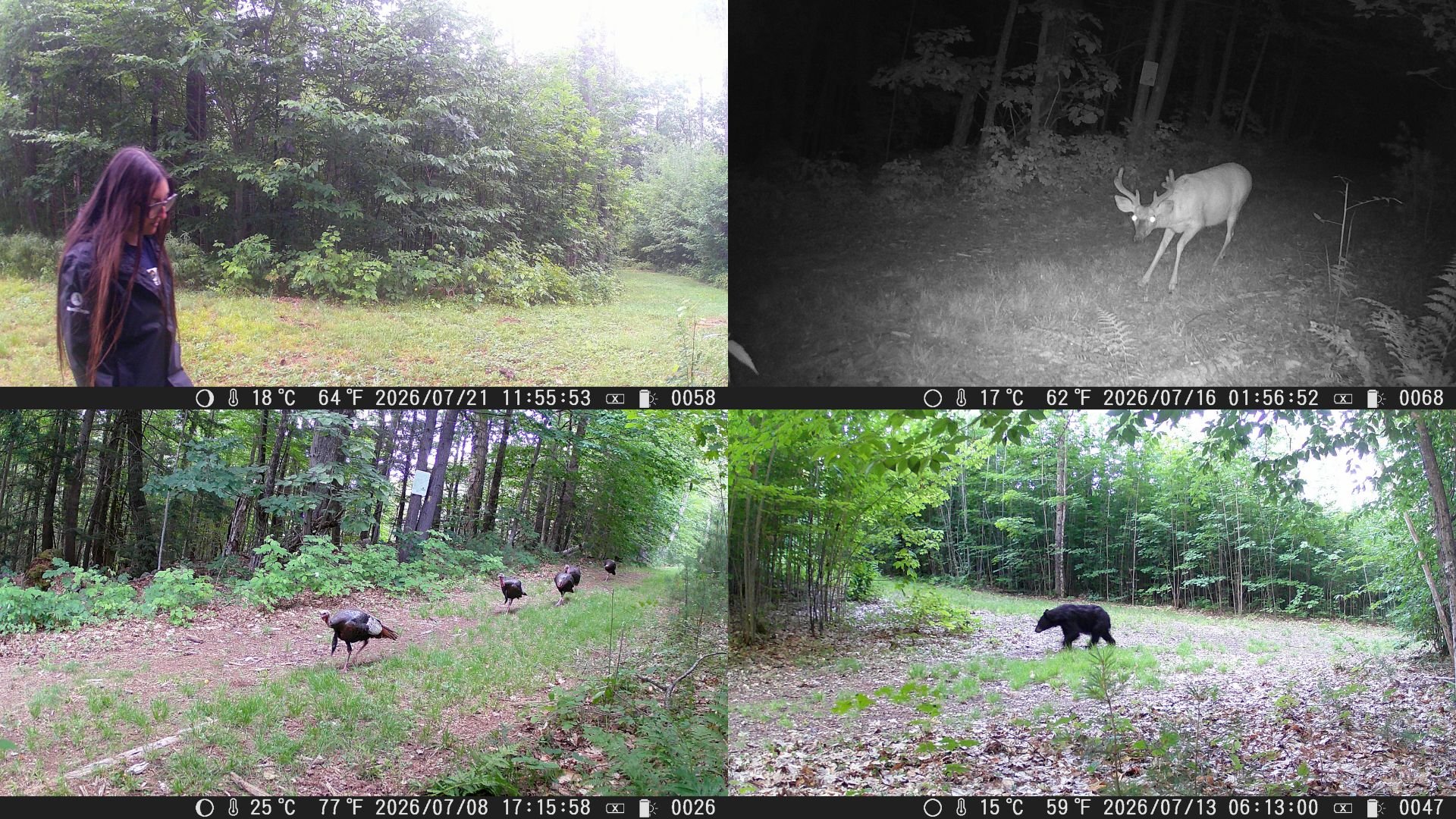
Snapshots from the wildlife cameras
In addition to the physical aspect of conservation, education and outreach is incredibly important. This summer, I partnered with a local day camp to have weekly educational nature activities. My first visit with the older kids involved setting up wildlife cameras. I began with a conversation about positioning and placing wildlife cameras with certain animals in mind. The first group placed two cameras on tree trunks directly across from one another, each capturing the other side of the trail. This caused quite a stir when we reviewed the footage of both cameras and the kids were rather disgruntled when we saw the same critters and people from the opposite angle. Despite this, we got amazing wildlife sightings on the four cameras placed along the trails. We found a lone turkey sighting followed by an orderly line of turkeys some time later, a coyote, an assortment of deer at all hours with and without antlers, a black bear, and the kids horsing around once they realized the cameras were capturing their shenanigans. Given the nature of a mostly outdoor camp visit, I had my laptop with all the camera footage on my lap, facing the campers as I scrolled through what we found. As I peeked over the top of the screen, I clicked to the next picture and the room erupted when the black bear appeared on the screen. It was such a crowd favorite that almost every camper shared their own bear encounter stories. This connection between the kids and the nature around them is uniquely special as so many people I meet around Newfound Lake have been coming here for generations and care deeply about its wellbeing. Being a part of these educational nature activities and seeing the joy it brings to the kids has been a particularly special part of my service term.
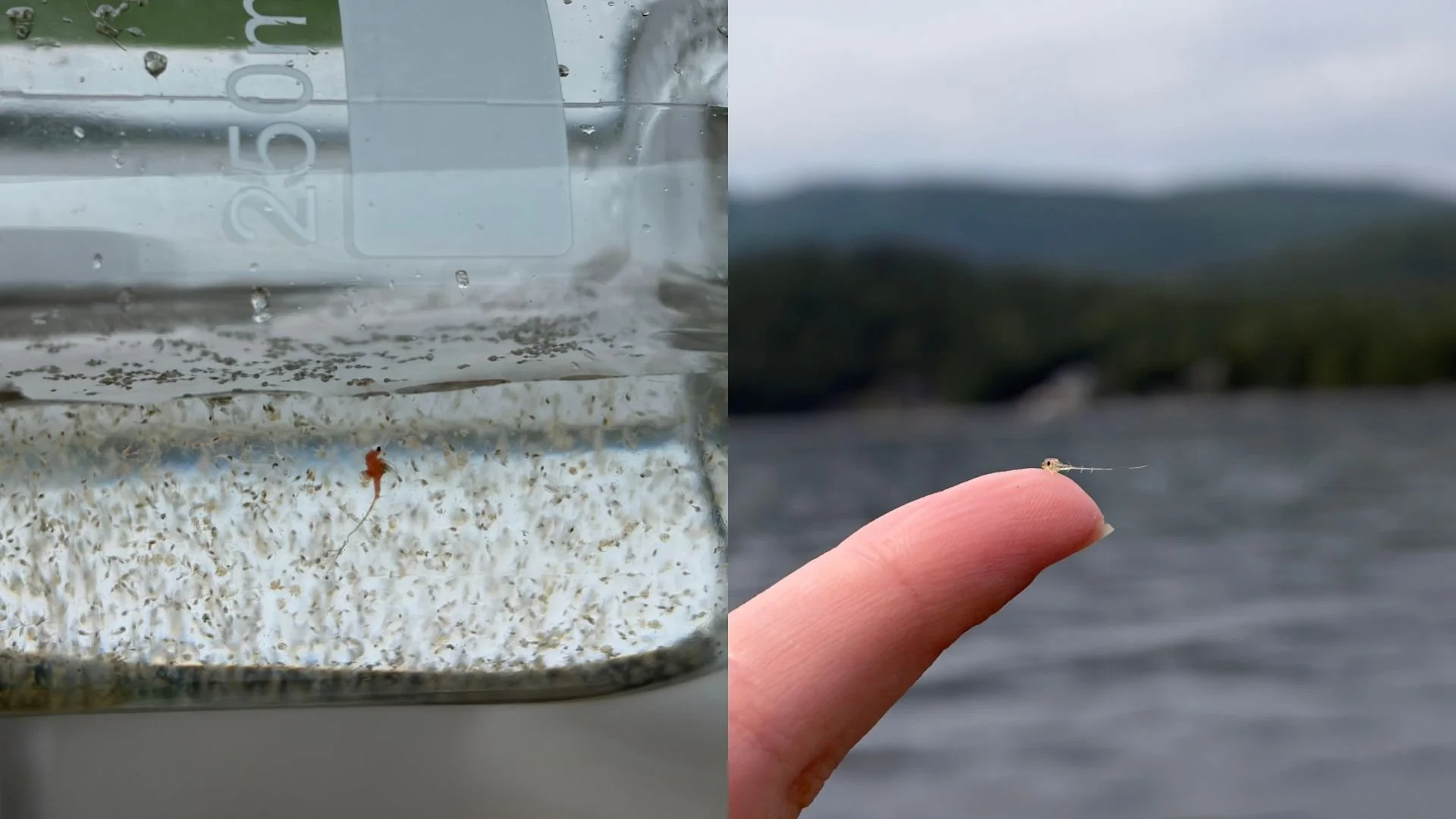
Pink spiny water flea in a plankton sample and a normal colored spiny water flea on a fingertip
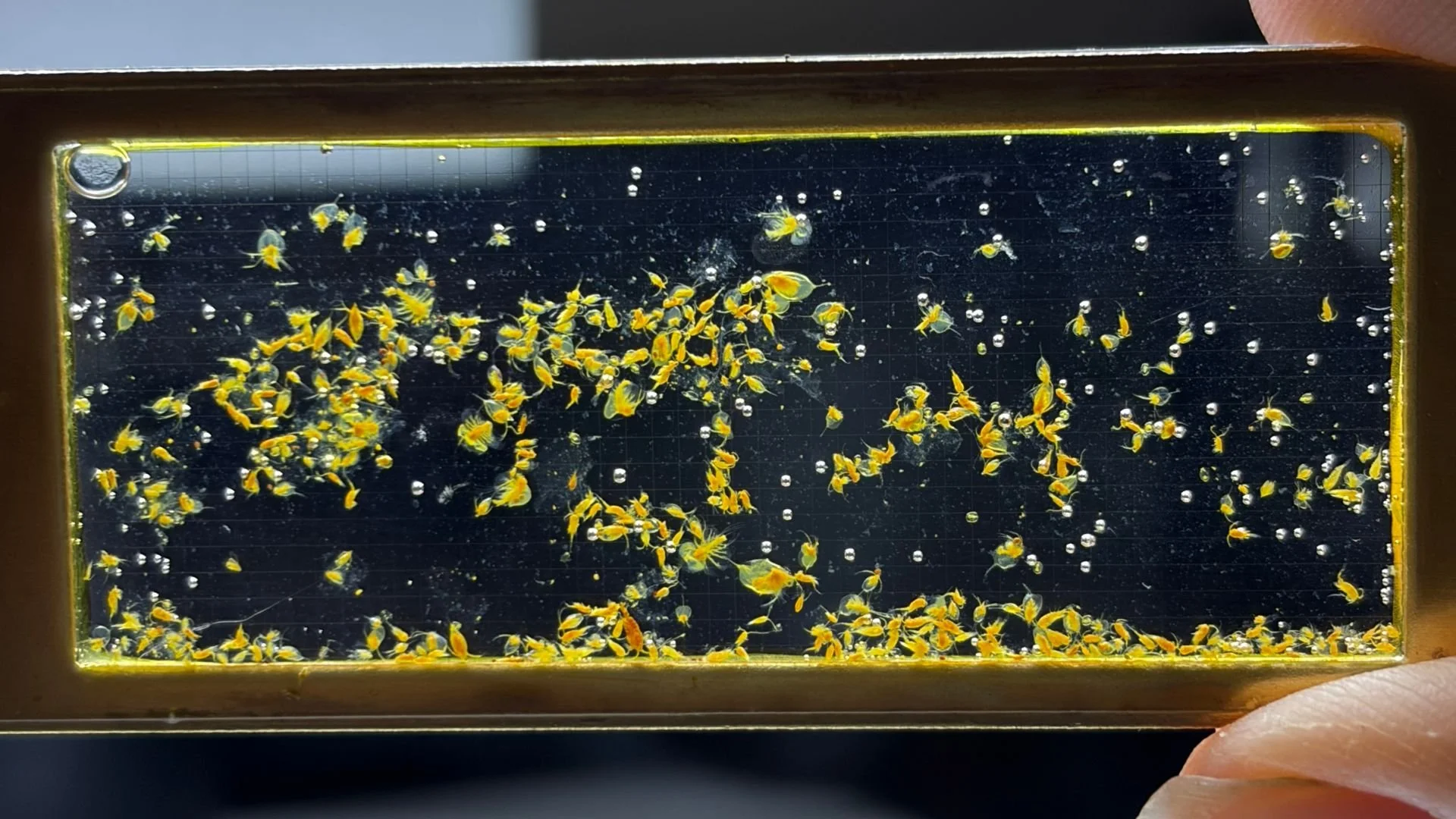
While Newfound Lake is fortunate to have zero aquatic invasive plants, we recently discovered an invasive plankton, spiny water flea, in 2025. A portion of my service term has been focused on plankton monitoring. This encompasses taking plankton samples from the boat and counting the spiny water flea. Certain samples are counted for other plankton species, particularly daphnia which are beneficial to the water quality of the lake. A few weeks ago, I was on the lake with a volunteer on their boat to collect our weekly plankton samples. We were at our second deepest site, measuring at about 46 meters or 150 feet. I reel up our plankton nets and spot something rather peculiar as I look down the net. At first, I thought I somehow skimmed a piece of bait from an angler. My confusion only grew when I got a closer look at the neon pink spiny water flea swimming around in the cup at the end of the net. This was a first for our plankton monitoring program. We all had our theories around the office, but decided to send photos of our bright pink spiny water flea to the plankton expert at UNH. The cause is still undetermined, but it could have been diet related or a reaction to very low oxygen levels. I have a theory about a genetic mutation due to the fact that no other plankton from around the lake have turned up neon pink in the many samples we have taken.
Pink plankton aside, I have learned so much about the Newfound watershed and all that it encompasses. This experience has allowed me to meet so many people who are passionate about the health and wellbeing of our ecosystem. It’s motivating to have visitors in the conservation center who tell me about how long their family has been visiting the lake and the reasons why they want to protect it. I am excited to see what lies in store for the last two months of term!
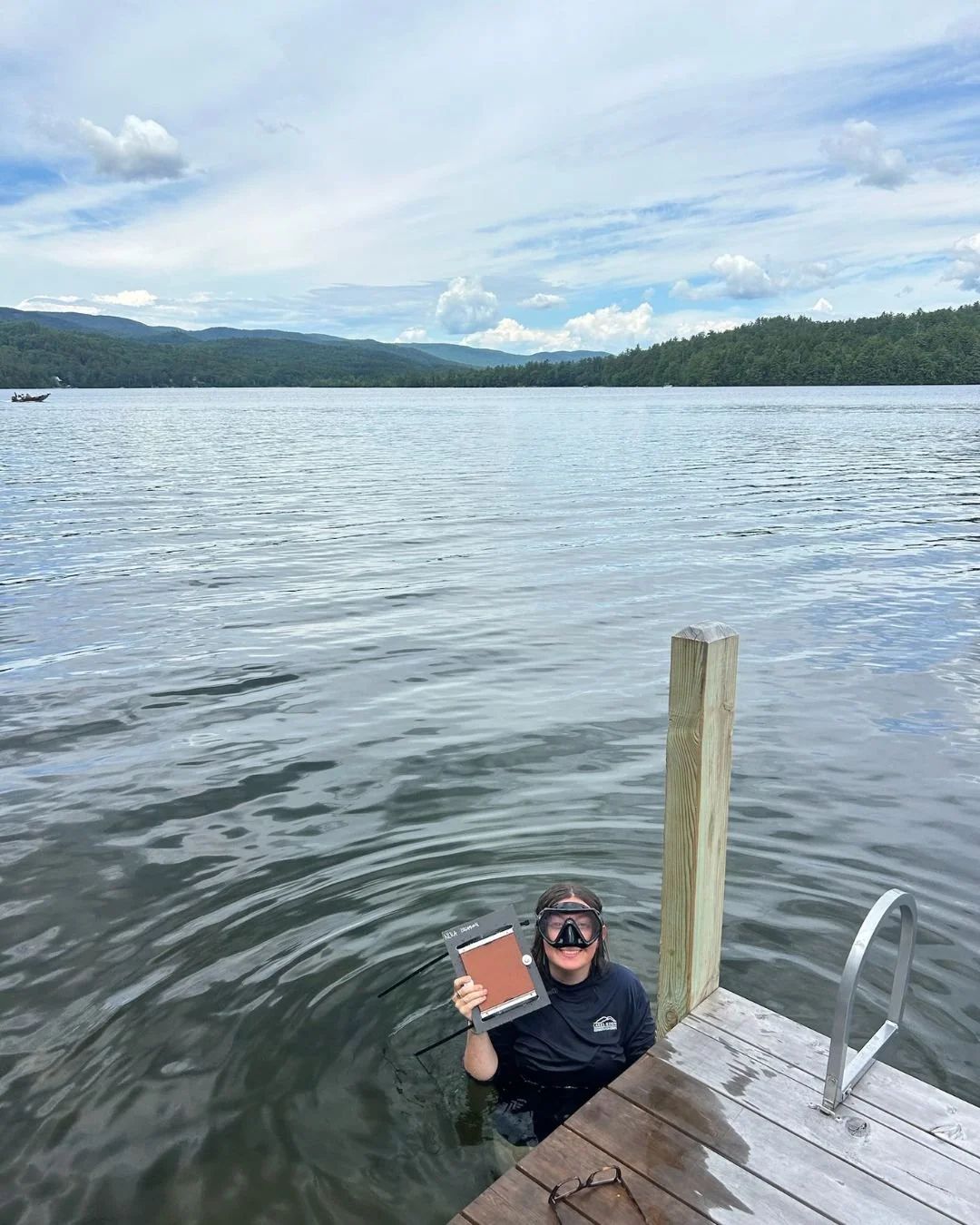
Helen is serving as a Watershed Steward with the Newfound Lake Region Association. She came from Phoenix, Arizona and recently graduated from the University of Oklahoma with a B.S. in Environmental Sustainability. Helen served a previous AmeriCorps term in Taos, New Mexico where she cemented her passion for being a steward of the environment. Learn more about her here.