
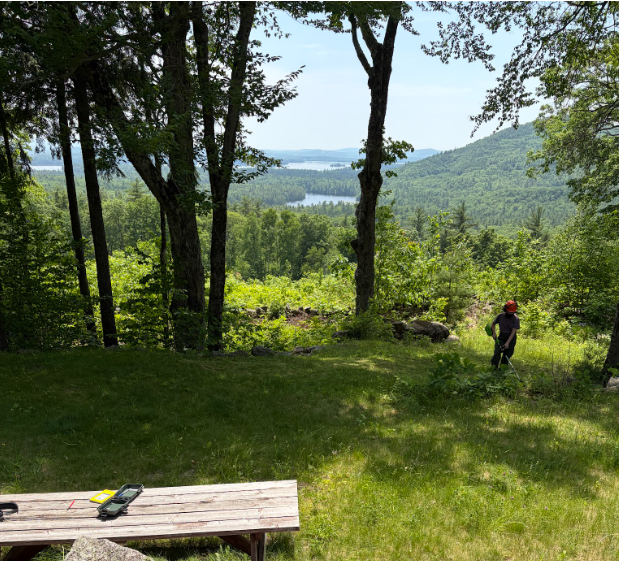
I’ll never forget my first night here. Living with a roommate who grew up on Little Squam, she didn’t understand why I was so unnerved by the silence. There was a chilling lack of human-made noise: the machine engines, the police sirens, the angry drivers honking at each other in the mere hours of the morning. I grew up in the cross-section of two major airports so the sounds came from the sky too. Most people pay extra for surround sound but I was enveloped by it for free all the time. But here, at Squam Lake, it’s so quiet I can hear signs of life outside those humans have created. There are peeper frogs, barred owls, and coyotes hollering their catch to us at night. The wind whistles through the trees and thunder echoes down the valley across the open water. Bees buzz around as they pollinate flowers and I swear it’s so quiet I can hear the spiders run across the cabin walls.
And there are stars—something you can’t hear but I never got to see. You don’t just have to imagine where they are, you can actually see them.
My first thought was: I could be murdered out here and no one would know. I very quickly realized there was a higher chance I would get mauled to death by the mama bear in the backyard instead of a rogue human being. I no longer have to worry about locking the door at night, except to keep out raccoons.
I was surrounded by life, the kind that would continue to exist even if everything humans made, including ourselves, disappeared. Within 24 hours I was addicted to the thought, to this place.
Where I’m from, development is pushing nearly everything else out of their own homes. We’re taking their space to the extent that it’s more likely you see a deer hit by a car on the side of the road instead of eating in a field. It always felt wrong to me. Being here now, the draw to prevent what I grew up with and protect what I see now has never been stronger.
Serving with Squam Lakes Conservation Society has not only allowed me to do just that but has opened doors to many possibilities in sustainability. One of my favorite small things we do here is leave notebooks at viewpoints for the hikers who pass through the area to write their thoughts in. There is no science behind this, just people writing their thoughts and feelings while experiencing natural beauty. I read one entry the other day from November 2024 that particularly struck me:
“I only learned recently that this is called ‘stick season.’ A period spent in transience between the beauties of New England nature. Beauty is a short-lived tyranny, and there must be a void after autumn for winter to fill. As the planet spins and its inhabitants carry on with the tiresome work of aging, one has to wonder about their own life and the short-lived beauty everyone possesses. Not every moment or season of life is picturesque, but it's the anticipation of what could come that’s valuable. Everyone has a stick season, and maybe that’s a good thing, for we only recognize the color and bright when confronted with the necessary darkness and night.”
It’s beautiful. What’s even more beautiful is that these entries are not data points. We aren’t collecting and quantifying them. They are simply a way for people to connect over a landscape. By protecting these lands we are simultaneously protecting human connection to each other as much as human connection to the land and its creatures. The excitement of a bird watcher seeing a pileated woodpecker at Coolidge-Beede Forest or the thrill of watching black bear cubs scamper up a tree at Unsworth Preserve are experiences that are protected as much as the land itself.
Biophilia: the tendency for humans to seek out connections and experiences in the natural world to feel more connected to their environments.
All life is intertwined by delicate strings that even with the disappearance of humans, will still be connected. Here, we protect those strings all while building more of them. By actions as simple as balancing trail maintenance with protection of the local endangered plants or removing invasive species while clearing space for local access, we are building that connection between humans and nature.
Organizations like SLCS help weave humans and animals, plants and the abiotic world together. The journals out in our protected lands show us it’s working. People start truly thinking, experiencing, and pondering life when facing something breathtaking like the view from Doublehead Preserve. Next time you’re out there, write what you’re feeling, what you see, what you hear (or don’t hear), what you hope to experience. Find the connection between yourself and the natural world through the words of strangers in these awe-inspiring places.
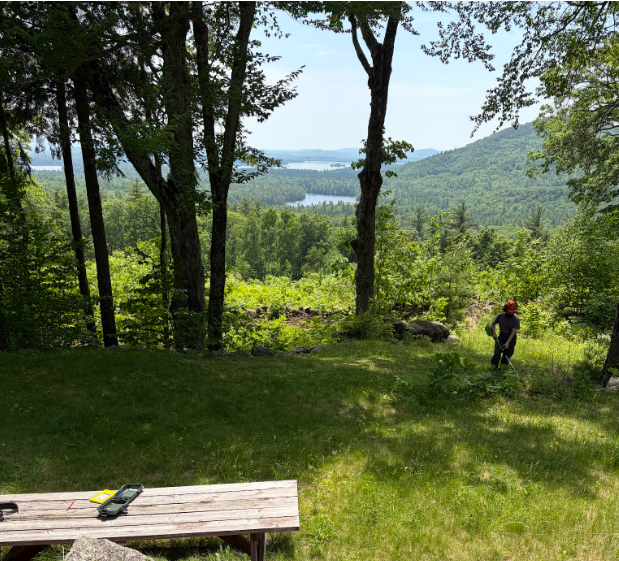
Hailey Mae is serving through AmeriCorps with the Squam Lake Conservation Society as a Land Steward. She graduated from Eckerd College in 2025 with a B.S. in Marine Biology and Animal Studies with a minor in Psychology. Before coming to LRCC, she was a Harvest Crew Field Hand at a local farm which sparked her interest in terrestrial sustainability. Learn more about her here.