
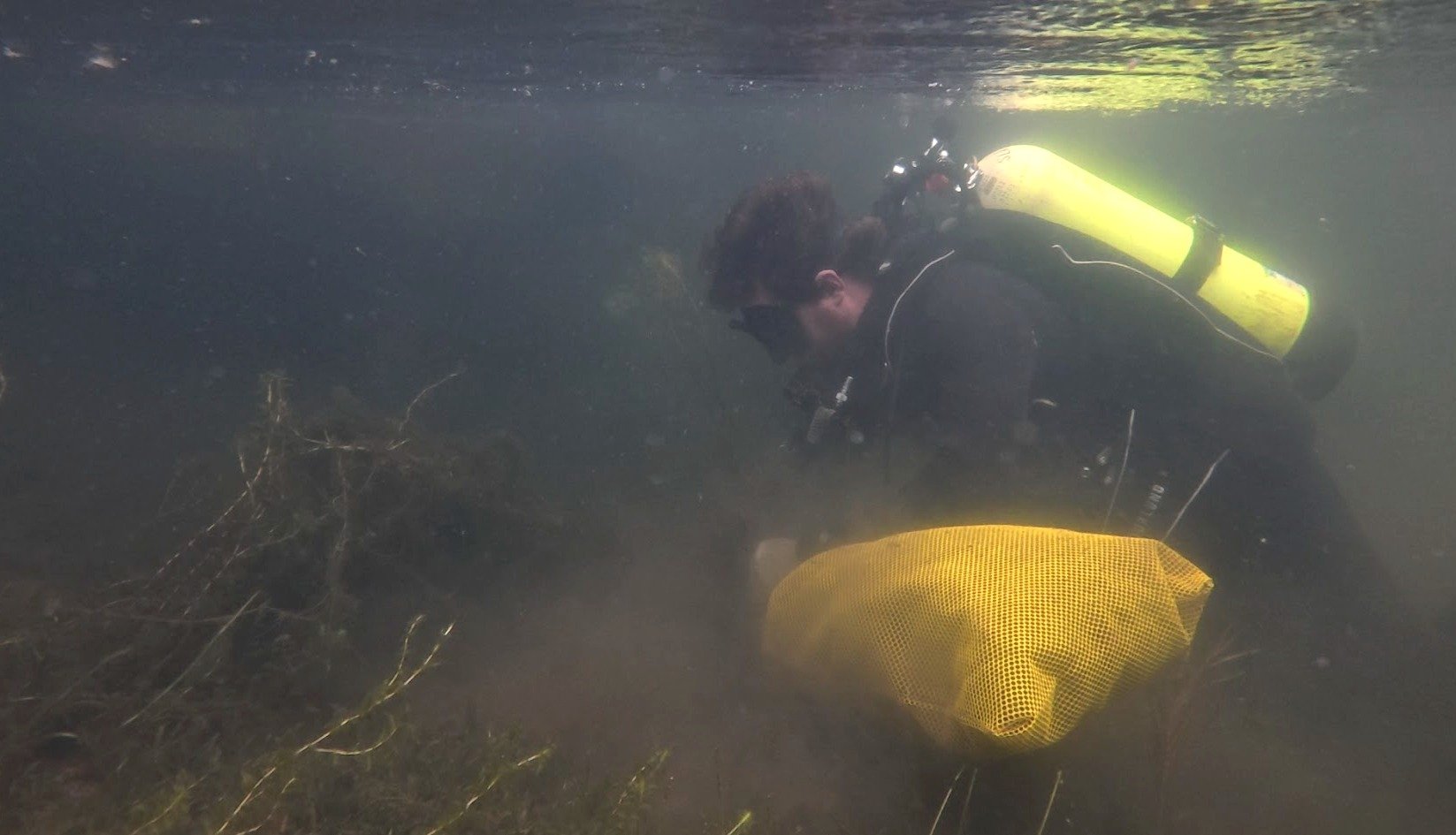
I have participated in invasive plant species removal/control in a lot of ways over the course of my professional life. At the park I worked at we would use a number of different herbicides to control the invasive plants, along with utilizing hand tools such as chain saws, shovels, loppers, etc. We also would utilize prescribed burns in areas as well as some heavier machinery to manage larger areas that were completely infested. All of these strategies are great for removing invasive species from terrestrial environments, however none of them would be ideal for aquatic ones. This year I had the opportunity to learn a couple of strategies for aquatic invasive species removal.
As part of my service duties at my home site at the Squam Lakes Association, we were trained in Open Water SCUBA diving as well as Weed Control Diving. These trainings taught us how to properly utilize SCUBA diving to remove aquatic invasive plant species by hand or with the assistance of a Dive Assisted Suction Harvester (DASH). These are both relatively non-disruptive to the lake-bed and are proven to be effective ways to limit the spread of benthic aquatic invasive plants.
The hand removal of aquatic invasive plants, which in our case was variable milfoil, is relatively simple. We dive down to the lakebed, find the base of the milfoil plant, then dig down under the rootball which usually was around 3-10 inches in the mud, then carefully extract the rootball from the lakebed. We would then place the plant in a mesh bag and move on to the next plant. As this is going on, we also have one person in a kayak collecting any fragments of plants that might have been broken off as we were digging out the plants. They would also be in charge of ferrying full bags to the dive boat and bringing empty bags to the diver.
Now DASH removal is very similar from the divers perspective, with the only difference being instead of placing the milfoil in a bag, you instead feed it into the vacuum tube. However in addition to the kayaker on the surface, we also have a person on the dive boat sorting through everything that gets collected with the DASH. Their job is to throw back any native plants or animals that inadvertently were sucked up along with the milfoil. They are also in charge of keeping track of how much milfoil was removed.
After diving for milfoil 2-3 times a week for the entire summer, I can say for sure that it is my new favorite way to manage invasive plant species. I have always loved the water and am fascinated by aquatic ecosystems, so I had always been interested in SCUBA so that definitely plays a large part in my adoration of this method of invasive species management. Being able to be completely immersed in the aquatic environment, seeing all the fish, turtles, invertebrates, and in one case a very curious loon swim by or up to me as I am pulling out milfoil was a lot of fun.
We measure milfoil removed by the gallon, and me and the others at my host site removed a total of 2,676.5 gallons of milfoil over the course of the season. I am unsure if I will ever get another opportunity to remove invasive species in this manor again, but I will always look back fondly at the memories I made taking part in it.
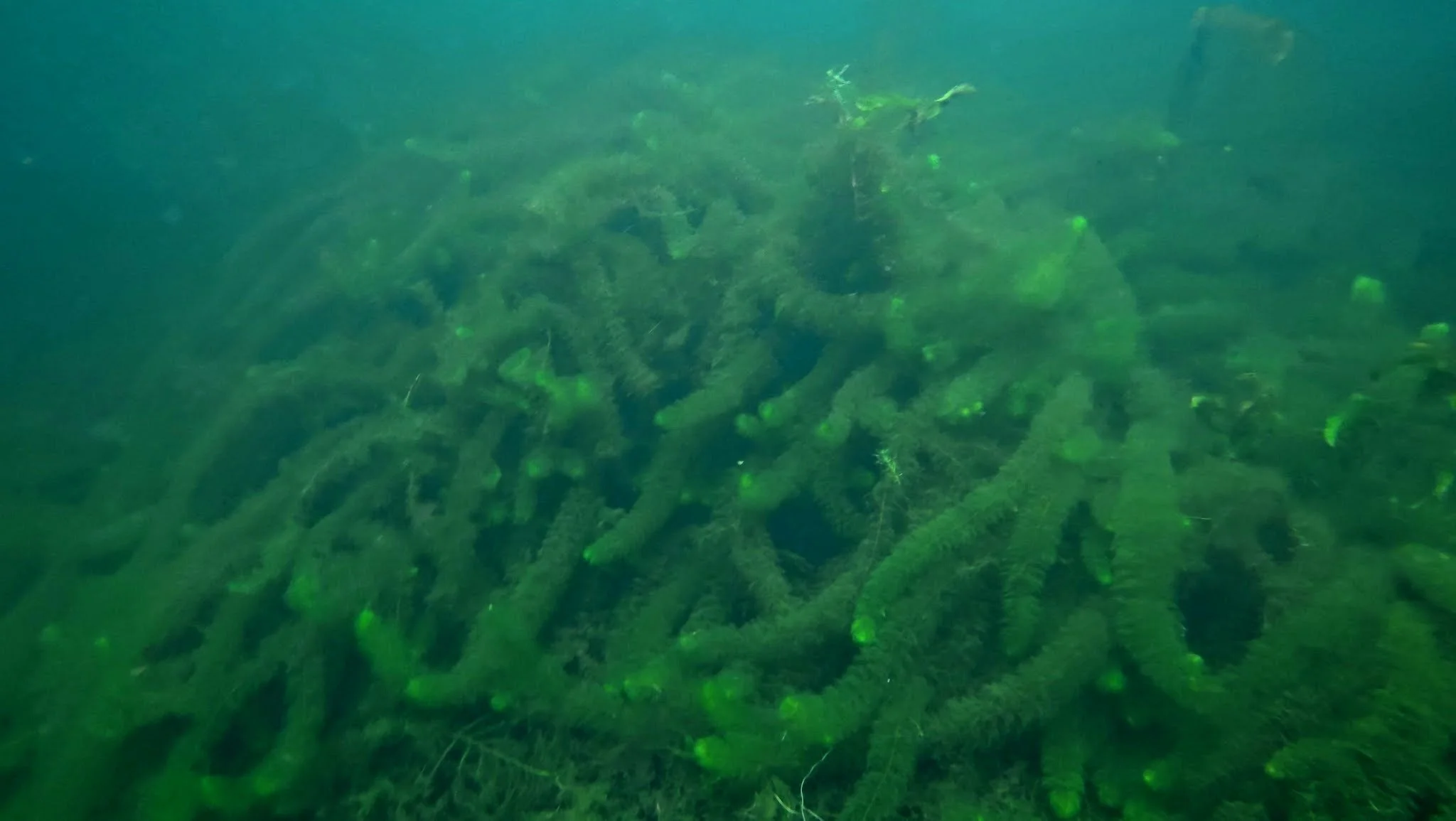
Eric Dart is serving as one of the Watershed Resource Assistants at the Squam Lakes Association. He graduated from Miami University with a Bachelors of Science in Biology in 2023, and worked for a parks system back home in Cincinnati for 2 years. He’s an avid birdwatcher and has always had a passion for freshwater ecosystems and conservation. Learn more about him here.