
As a New Englander, I’ve learned over the years to welcome the seasons by allowing them to dictate my outdoor activities. In summer there’s hiking, rock climbing, kayaking, and swimming. In the fall, the vibrant foliage turns a simple stroll into a visual treat. In early to mid winter when lakes and ponds freeze over, there’s figure skating and pond hockey. Later in the winter when the snow falls, there is downhill and cross country skiing, winter hiking, snowshoeing, and sledding.
I’ve always found early spring in New England to be a difficult time of year. Not enough snow and ice to skate or ski, yet too cold to jump in the lake. Just as it looks like winter has finally given way to a sunny 65 degree day, the next week is 20 degrees.
But during this time of year comes something that I can really look forward to: the salamander brigade. On rainy nights that are above 40 degrees (commonly referred to as “big nights”), hundreds of amphibians migrate from wooded areas underground to wetlands and vernal pools to mate and lay their eggs. Often these annual migration routes cross a road. This means that one car has the potential to wipe out dozens of amphibians including spotted salamanders, spring peepers, wood frogs, 4 toed salamanders, red efts, and more. Over time, a consistent flow of traffic can significantly decrease the amphibian population at that location.
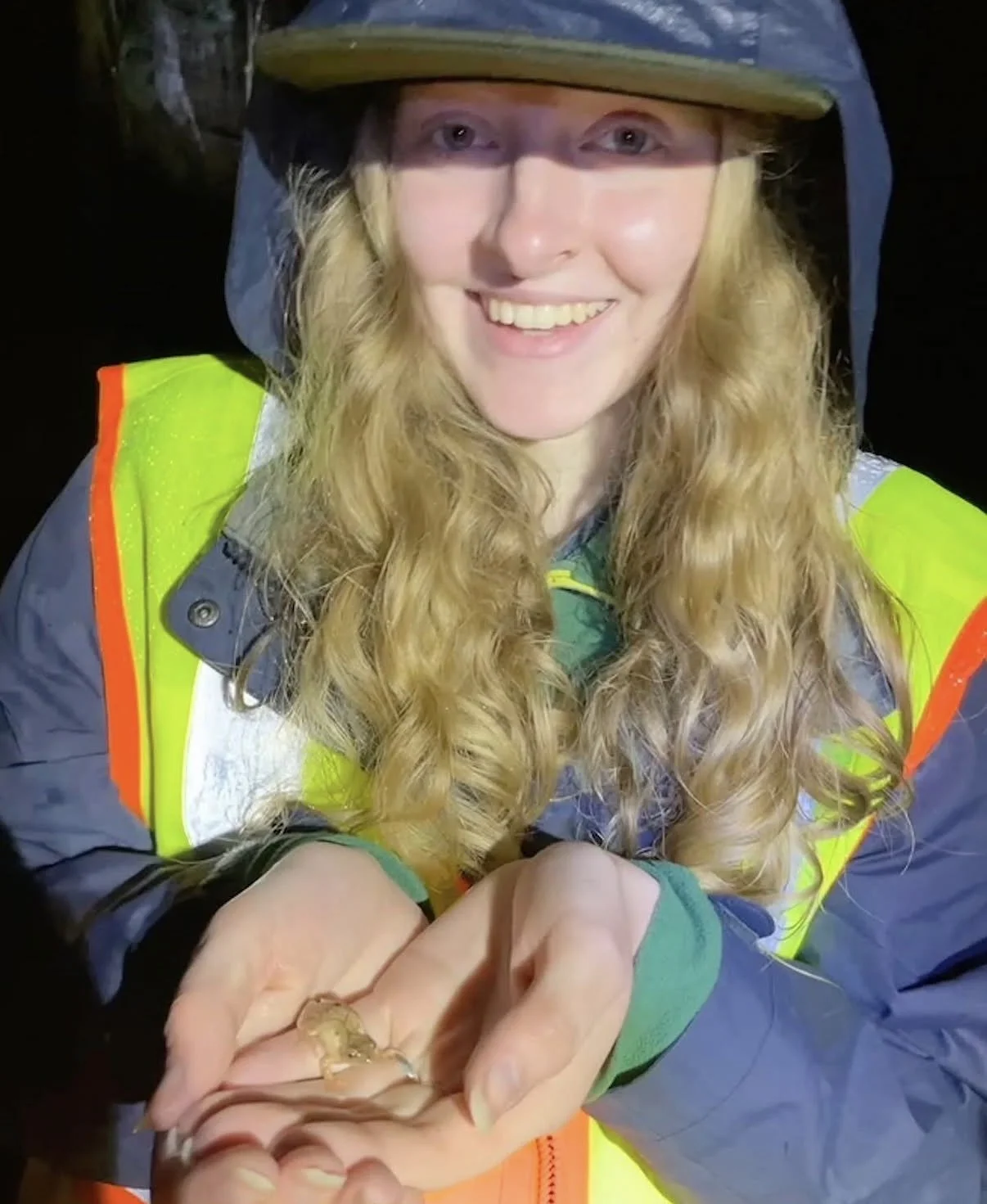
Salamander crossing volunteers can make a real difference in preventing amphibian mortality. By picking up amphibians on the road during big nights and carrying them safely to the other side, not only are volunteers directly helping amphibians, but they are also contributing to community science by keeping count of the number of individuals of each species.
Here at the Squam Lakes Association (SLA), we’ve been organizing a Squam salamander brigade with crossing locations in Holderness, Center Harbor, and Moultonborough. I’m grateful that as an AmeriCorps Volunteer Program Assistant serving with the SLA, I have opportunities to support community science. So far we’ve gone out twice for big nights and crossed 515 individual amphibians. It is an indescribable feeling of joy to pick up a spotted salamander or a pickerel frog or a red backed salamander and safely bring them across the road. Not only is it a way to get outside when I normally wouldn’t be, but I know that I’m making an impact for the better.
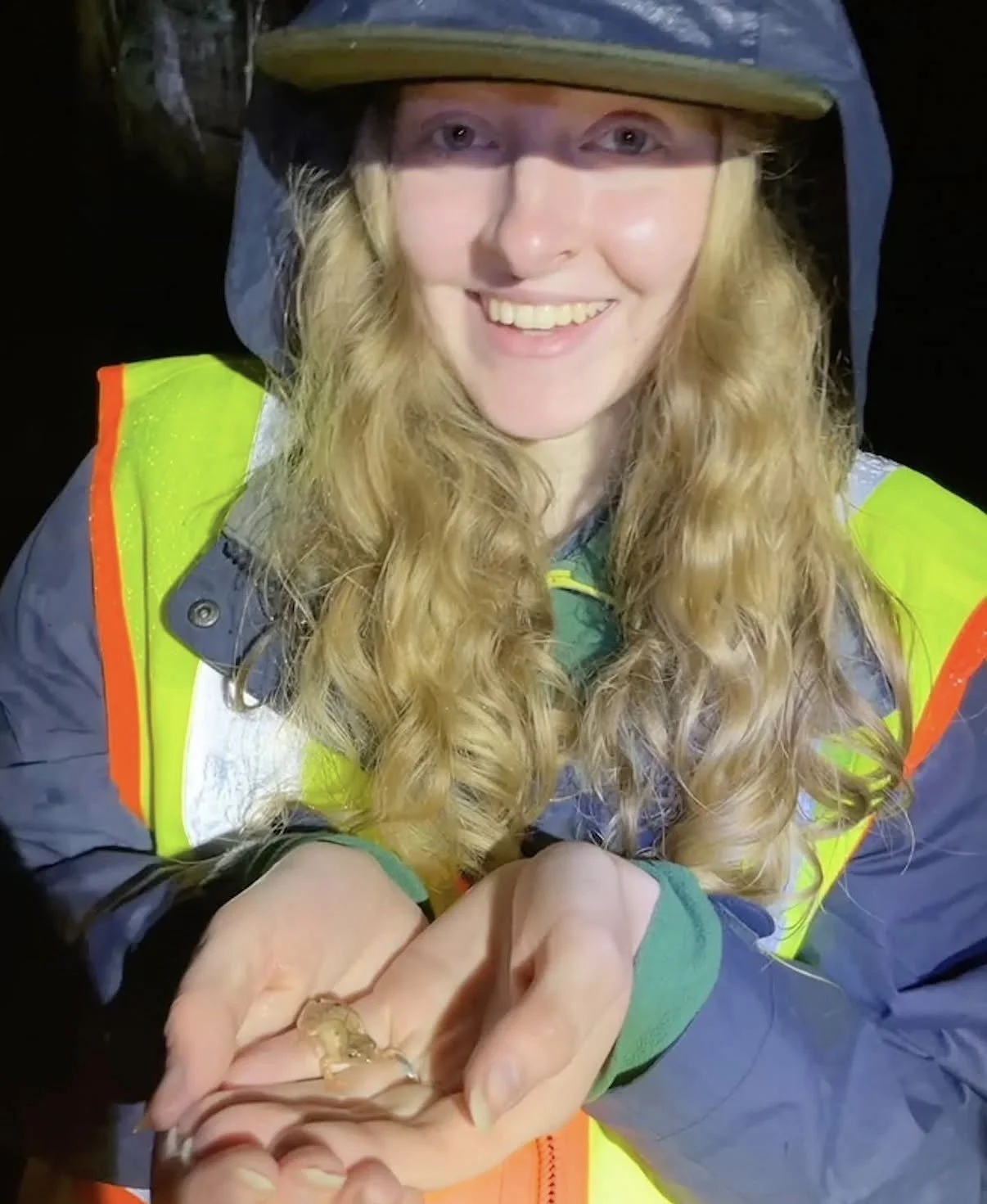
Chloe is serving with Squam Lakes Association as a Volunteer Program Assistant. She recently graduated from Keene State College with a degree in environmental studies and sustainability. Chloe is passionate about improving the human connection to nature. She loves spending time outdoors and traveling. Learn more about her here.